Finley Franke · 2 September 2026
A cache of previously unknown letters written by W.H. Auden has come to light in a private collection held in Oxford. The correspondence, spanning the 1930s to the 1960s, was identified during a routine inventory of papers belonging to a former Oxford academic. Scholars describe the find as significant for understanding Auden’s personal and intellectual life during key periods of his career.
The Discovery Details
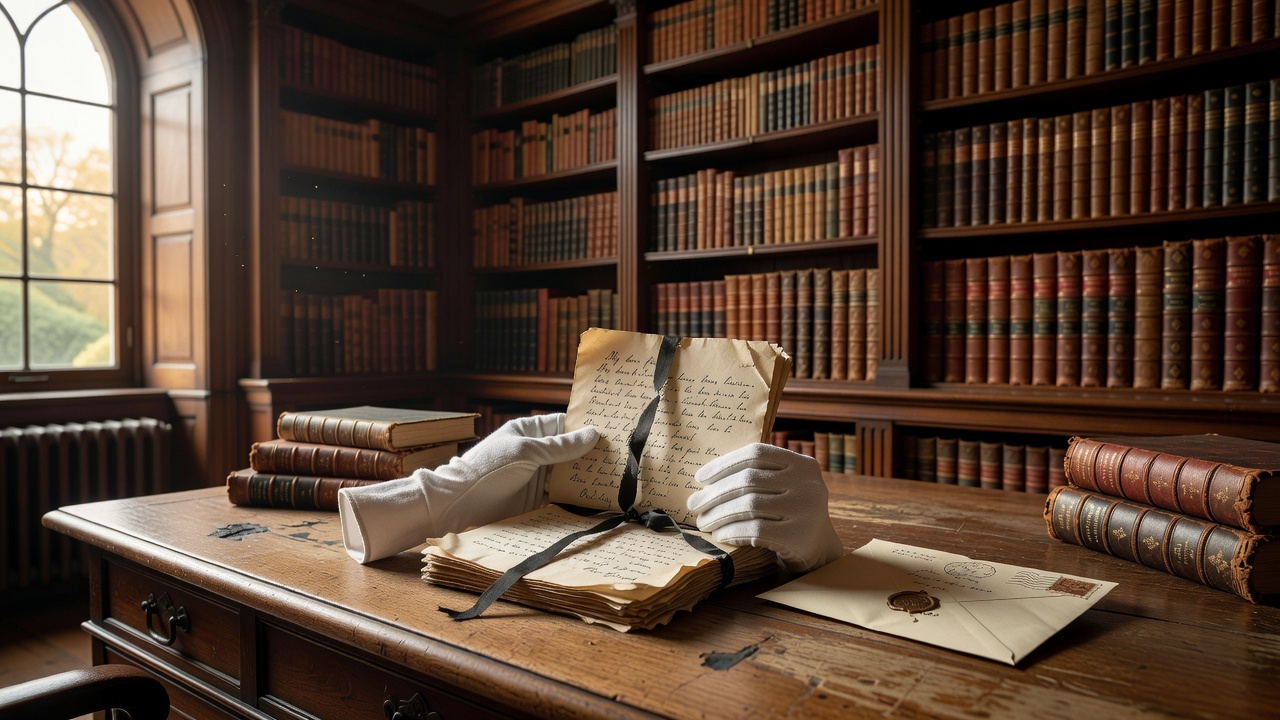
The letters were stored among the effects of the late Professor Eleanor Graves, who taught English literature at Balliol College until her retirement in 1987. Family members discovered the documents while preparing the estate for donation to the Bodleian Library. Among the items are thirty-seven letters addressed to Graves and several mutual acquaintances, along with drafts of poems and marginal annotations in Auden’s distinctive hand. The earliest letter dates from 1934, shortly after Auden’s return from Berlin, while later examples discuss his move to the United States and reflections on postwar Europe. Conservation work has begun at the university’s Weston Library to stabilise the fragile paper and ink.
Initial examination suggests the letters contain candid commentary on Auden’s contemporaries, including Stephen Spender and Christopher Isherwood, as well as observations on the Spanish Civil War and the rise of fascism. One note refers to an unpublished poem fragment that appears to prefigure themes later developed in “September 1, 1939.” Researchers note that the tone remains consistent with Auden’s published prose, blending precise literary analysis with wry personal asides.
Implications for Auden Studies
Experts at the Auden Society have welcomed the material as a valuable addition to existing archives at the Berg Collection and the New York Public Library. The letters are expected to clarify Auden’s evolving views on religion and politics during his middle period. A preliminary catalogue is scheduled for release next year, after which selected items may be digitised for wider academic access. The Bodleian has confirmed that the collection will remain closed to researchers until cataloguing is complete, a process estimated to take eighteen months. Funding for conservation has been provided by the university’s English Faculty and a private donor with ties to the Auden family estate. Further announcements regarding public exhibitions are anticipated once the papers have been fully assessed.